

|

|
|
When Can Police Search Your Car?
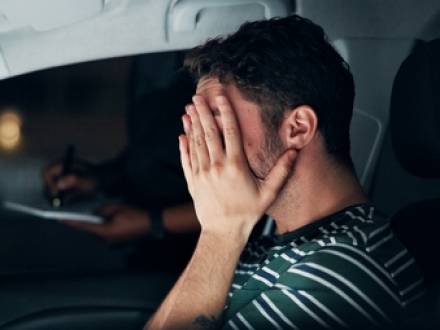 There are a number of things that can cause a police officer to pull you over. Maybe your tail light was out, you did not use your turn signal, or you ran a red light. A police officer will likely pull you over for such violations. In some situations, an officer may request to search your vehicle.
While the aforementioned violations could constitute a legal traffic stop, is it legal if the officer requests to search your vehicle? Technically, there are certain circumstances in which a police officer can search your vehicle without a warrant.
If you have questions about a police search or warrant tied to a case, reach out to an Arlington Heights, IL criminal defense lawyer. Scott F. Anderson, Attorney at Law has represented clients in criminal cases for over 25 years, serving as a trusted source of legal guidance for people in need.
When Can a Police Officer Search Your Vehicle in 2026?
The Fourth Amendment to the United States Constitution says U.S. citizens have the right to "be secure in their persons, houses, papers and effects, against unreasonable searches and seizures." This means police cannot search your property for no reason. There are only a handful of situations in which a police officer can legally search your car without a search warrant.
- You consent to the search: Police may try to gain your consent to search your vehicle. If you verbally agree to a vehicle search, you have effectively waived your Fourth Amendment rights.
- Something illegal is in plain view: Plain view simply means the officer must be able to see the evidence without actually searching for it. For example, if a police officer pulls you over and he or she notices a bag of marijuana on the passenger seat, the officer can enter your vehicle to retrieve the marijuana.
- You were placed under arrest: If an officer has gained enough evidence to perform an arrest, he or she can then sometimes search your vehicle. This is called a "search incident to a lawful arrest," and can be performed if your vehicle was involved in the crime you were arrested for.
- Probable cause: Often, probable cause is gained through a variety of actions and observations. For example, an officer may be legally permitted to search your vehicle if he or she gathered from the conversation that you had smoked marijuana earlier. The odor of raw (not burnt) cannabis coming from your vehicle can also serve as a probable cause.
Can You Legally Refuse a Search of Your Vehicle at a Traffic Stop in Illinois?
As previously mentioned, your right to refuse a police search is protected by the Fourth Amendment. You can say clearly that you do not consent to a search, and the officer must respect that refusal. This does not stop an officer from searching anyway if they believe they have a lawful reason, but refusing can protect your rights later in court.
When Can Evidence From a Police Search Be Excluded From Court?
Even when a search turns up drugs, weapons, or other evidence, that evidence does not automatically become part of a criminal case. If a search violated a person's constitutional rights, a defense attorney can file a motion asking the court to suppress that evidence. This means the prosecution cannot use it at trial.
Judges take these motions seriously. If the search was unlawful, any evidence gathered from it can be thrown out, along with anything discovered because of it. This is sometimes called the "fruit of the poisonous tree." For example, if an illegal search leads police to a hidden weapon, and that weapon leads them to a witness, both the weapon and the witness statement could be excluded.
Losing key evidence can weaken a case significantly. In some situations, prosecutors decide not to move forward at all once the evidence is gone. This is one reason it matters so much to have a lawyer review the details of a search early in a case.
Does Evidence Found in a Vehicle Always Point to Guilt?
Finding drugs, a gun, or other illegal items inside a vehicle does not automatically mean the driver or any passenger is guilty. Illinois law requires the prosecution to prove something called constructive possession. This means the person knew the item was there and had the ability to control it.
This issue comes up often when more than one person is in a car. If police find drugs under the passenger seat, it is not clear that the driver put them there or even knew about them. The same is true if a gun is found in a shared trunk of a car used by several family members. Rental cars and borrowed vehicles raise similar questions, since many people may have had access to the same space.
Prosecutors cannot rely on location alone. They need evidence connecting a specific person to the item, such as fingerprints, statements, ownership records, or other proof of knowledge and control. Without that connection, guilt cannot be assumed simply because something illegal was found nearby.
Do Police Need a Lawful Reason to Pull You Over in Illinois?
Police in Illinois need a valid reason to stop a vehicle. This is usually based on a traffic violation, such as speeding, a broken taillight, or failing to signal. In other cases, officers may rely on reasonable suspicion that a crime is taking place.
A stop can still be lawful even if the officer's real motive was to investigate something else, as long as an actual violation occurred. These are sometimes called pretextual stops. However, if there was no violation and no reasonable suspicion, the stop itself may be challenged in court. If a stop is found to be unlawful, any evidence gathered afterward could also be suppressed.
Contact an Arlington Heights, IL Criminal Law Attorney
Whether you have been pulled over unlawfully or you believe that police conducted an illegal search of your vehicle, Scott F. Anderson, Attorney at Law can help. There are certain procedures that must be followed by law enforcement when they conduct a traffic stop. If you were charged with a crime as a result of an improper traffic stop or an illegal vehicle search, you may be able to have your charges dismissed.
Contact our knowledgeable Rolling Meadows, IL criminal defense lawyer today at 847-253-3400 to discuss your options.
CALL US TODAY AT 847-253-3400 FOR A FREE INITIAL CONSULTATION
Client accused of burglary was acquitted due to our skillful cross examination of eye witness identification.
Client accused of causing the death of another while driving under the influence - Acquitted.
Client accused of first degree murder - Acquitted.
Client accused of embezzlement - Charges never filed.
Hundreds of Secretary of State hearings for Drivers License Reinstatement - Won.



121 S. Wilke, Suite 301, Arlington Heights, IL 60005
847-253-3400
