

|

|
|
Can You Refuse a Field Sobriety Test in Illinois?
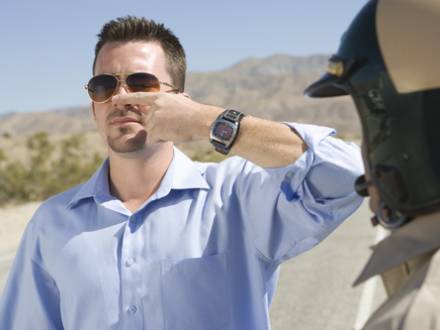 Getting pulled over for a DUI is a nerve-wracking experience. You do have rights, however, and you should exercise them to the fullest extent. This includes your right to refuse a field sobriety test. Before you do, though, there are some things you should know.
Consenting to a field sobriety test or refusing to take one can have implications for your case. An Arlington Heights, IL drunk driving defense lawyer can review your situation and help you determine the best course of action. Scott F. Anderson, Attorney at Law has over two decades of criminal law experience, so you can trust him to provide you with clear guidance in a DUI case involving a field sobriety test.
What Are the Standardized Field Sobriety Tests?
When an Illinois police officer suspects DUI, they may ask you to perform standardized field sobriety tests, often called FSTs. These tests are meant to help officers decide whether they have probable cause to make an arrest. The three standardized tests approved by the National Highway Traffic Safety Administration are:
- Horizontal Gaze Nystagmus (HGN): The officer asks you to follow a pen or small object with your eyes. They look for involuntary jerking of the eyes, which they claim can be linked to alcohol use.
- Walk-and-Turn: You must take a certain number of heel-to-toe steps in a straight line, turn in a specific way, and walk back the same way. The officer watches for balance issues, missed steps, or failure to follow instructions.
- One-Leg Stand: You are asked to stand on one leg while counting out loud for about 30 seconds. The officer looks for swaying, hopping, or putting your foot down.
While these tests may seem straightforward, it’s easy to make mistakes under pressure. The officer will write down any indicators of possible impairment, which could later be used against you.
Do You Have to Submit to a Roadside Breath Test in Illinois?
In Illinois, you do not have to submit to a roadside breath test before an arrest. This handheld device is often called a preliminary breath test, or PBT. Like field sobriety tests, it is used to help the officer decide whether to arrest you.
In Illinois, you are considered legally intoxicated if you have a blood alcohol concentration of .08 percent or higher. If you blow too high on a portable breath test, it could give the police officer probable cause to arrest you. For that reason, it is usually in your best interests to refuse these tests.
However, the rules change after an arrest. Under Illinois implied consent laws, if you are lawfully arrested for DUI, you are required to submit to chemical testing. This can include a breath, blood, or urine test (625 ILCS 5/11-501.1). Refusing chemical testing after arrest can lead to an automatic driver’s license suspension, even if you are later found not guilty of DUI.
In short, you can refuse roadside testing before arrest. Once arrested, refusing chemical testing carries serious consequences. Understanding this difference is critical during a DUI stop.
The History and Use of the Field Sobriety Test
Developed and first implemented in the 1970s, the field sobriety tests are the standard method officers use to determine if a driver may be intoxicated. However, these tests are not quite as objective as some might lead you to believe. Even sober people can struggle in a field sobriety test.
This can be especially true for someone who suffers from a medical condition that causes poor balance or lack of eye coordination. One can also fail the test for other reasons that are completely unrelated to intoxication, such as fatigue or stress. Yet field sobriety tests are used to make DUI arrests each and every day.
Other Problems With Field Sobriety Tests
Aside from factors like medical conditions or nervousness that can skew results, there are other compelling reasons to refuse a field sobriety test. First, roadside conditions are rarely ideal. You may be standing on gravel, grass, or uneven pavement. Flashing squad lights can distract you. Darkness makes it harder to see instructions clearly. None of these conditions exist in a calm testing environment.
Second, weather plays a role. Cold temperatures can cause stiffness. Rain or snow can make the ground slippery. Strong wind can affect balance. These factors have nothing to do with alcohol but can still lead to "clues" of impairment in an officer’s report.
Third, field sobriety tests rely heavily on the officer’s observations. The officer decides whether you swayed too much, turned incorrectly, or started too soon. These judgments are subjective. Two officers might view the same performance differently.
Your Right to Refuse a Field Sobriety Test in 2026
As a citizen of Illinois, you have the right to refuse the field sobriety test, and in many cases, it is advisable to do so. Unfortunately, that right does not prevent you from being arrested, nor does it eliminate the possibility of criminal charges.
Keep in mind that refusing a field sobriety test doesn’t instantly shut down the prosecution’s case against you, especially if the prosecutor argues that your refusal to take the test is an admission of guilt. Our firm can anticipate these arguments and build a defense around them, fighting for your rights in court.
Contact a Rolling Meadows, IL Criminal Defense Attorney
While it is impossible to predict the outcome of any case beforehand, people who seek assistance from an experienced DUI attorney tend to have more favorable outcomes than those who attempt to fight their charges on their own. This is because attorneys are familiar with the law and they fully understand your rights. Furthermore, an attorney may be able to explore mitigating circumstances, even if there is solid evidence against you.
Do not fight your DUI alone. Instead, contact Scott F. Anderson, Attorney at Law, and get the aggressive representation you need. Backed by more than 25 years of experience and dedicated to protecting your rights and future, our Arlington Heights, IL DUI defense lawyer will work hard to achieve the most favorable outcome possible in your case. To learn more, call 847-253-3400 and schedule your free consultation today.
CALL US TODAY AT 847-253-3400 FOR A FREE INITIAL CONSULTATION
Client accused of burglary was acquitted due to our skillful cross examination of eye witness identification.
Client accused of causing the death of another while driving under the influence - Acquitted.
Client accused of first degree murder - Acquitted.
Client accused of embezzlement - Charges never filed.
Hundreds of Secretary of State hearings for Drivers License Reinstatement - Won.



121 S. Wilke, Suite 301, Arlington Heights, IL 60005
847-253-3400
