

|

|
|
Traffic Ticket: Should You Fight It Or Simply Pay the Fine?
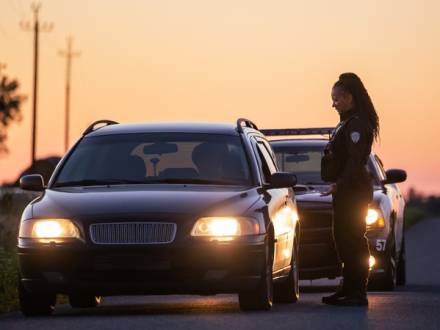
Under Illinois state law, there are numerous traffic violations that could lead to a ticket. Many people do not realize that traffic tickets can be challenged, but is fighting your latest one really worth the trouble? The answer depends on your situation. In many cases, a review of the events leading up to the ticket can expose weaknesses in the officer’s claims.
At Scott F. Anderson, Attorney at Law, our Arlington Heights, IL traffic defense lawyer has over 25 years of legal experience. We can review your case to see if you have a valid defense against a traffic ticket and go over the options to minimize the damage. As a former prosecutor himself, Attorney Scott Anderson knows how these cases proceed through the court system.
What Are Some of the Most Common Traffic Violations?
Traffic violations in Illinois cover a wide range of driving conduct. Some tickets involve simple mistakes, while others point to more serious driving habits. A few violations appear again and again on Illinois roads, including:
- Speeding, which includes driving above the posted limit or too fast for weather and road conditions
- Running a red light or failing to stop fully at a stop sign
- Improper lane usage, such as drifting between lanes or turning from the wrong lane
- Failure to yield the right of way at an intersection or crosswalk
- Following too closely behind another vehicle
- Using a handheld cell phone while driving
- Driving with a suspended or revoked license
- Operating a vehicle without valid insurance
Each of these violations carries its own penalty range. A single ticket may seem minor, but the effects add up quickly with multiple violations.
Did You Actually Violate a Traffic Law?
Police officers can make mistakes about what happened during a traffic stop. A ticket can be challenged if the facts do not match the violation listed on the citation. For example, video, photos, or witness statements could show that the driver did not do what the officer claimed. Small details can make a big difference in a traffic case. An attorney can compare the evidence with the officer’s report to look for problems with the ticket.
Should You Contest the Ticket or Pay It?
Paying a traffic ticket without contesting it usually means pleading guilty. So, if you have any doubts as to whether or not the law was actually violated, you should contact an attorney before deciding whether to pay it or fight it. Most importantly, attend your court date and do not pay anything toward the balance until you have a final determination from a judge.
What Are The Consequences of a Traffic Ticket Violation?
A traffic ticket can cost a driver much more than the fine printed on the citation. Most minor violations bring fines and court costs that range from about $100 to several hundred dollars. The exact amount depends on the county, the violation, and whether the driver has a prior record.
Convictions for moving violations also add points to a driving record. The Illinois Secretary of State assigns a point value to each type of conviction. Three convictions for moving violations within a 12-month period can lead to a suspended license for a driver who is at least 21 years old. Drivers under 21 can face suspension after just two convictions within a 24-month period. Insurance companies watch these records as well, and rates often climb after a conviction.
Some traffic offenses are crimes, not simple tickets. Driving 26 to 34 miles per hour above the speed limit is a Class B misdemeanor in Illinois. Driving 35 miles per hour or more above the limit is a Class A misdemeanor (625 ILCS 5/11-601.5). Driving on a revoked license, reckless driving, and leaving the scene of a crash can also lead to criminal charges. A conviction in these cases can mean jail time and a criminal record.
How Should You Respond to a Traffic Ticket in 2026?
Getting a ticket and a court date can be overwhelming. Whatever you do, do not do nothing. This can lead to serious consequences, including jail time for failure to appear in court. Instead, contact an experienced criminal defense lawyer and explain your situation. If contesting your ticket is an option, they will let you know how they may be able to help. And, even if contesting is not an option, an experienced attorney can help you figure out how to minimize the damage that a ticket has on your record.
What Defenses Are There Against Traffic Violations?
There are several possible defenses to a traffic ticket. An attorney can explain which defenses fit your case.
One of the most commonly employed defenses is to question the evidence behind the stop. A defense attorney can look at whether a radar or laser device was working and used correctly. They can also check whether required traffic signs were properly posted. These details can weaken the state's case.
Another approach is to challenge the reason for the stop itself. An officer needs a valid legal basis to pull a driver over. When that basis is missing, a judge may throw out the evidence that followed.
Court supervision is also worth considering. Supervision is not a conviction, so it does not add points to a driving record when the driver completes the terms set by the court. Whether supervision is available depends on the ticket and the driver's record. Our attorney can also sometimes negotiate a moving violation down to a non-moving violation, which can help avoid points on your driving record.
Contact Our Arlington Heights, IL Traffic Ticket Defense Lawyer
Scott F. Anderson, Attorney at Law can help you fight a traffic violation charge. Skilled in handling criminal charges relating to DUIs, speeding, driving while suspended or revoked, and more, our Arlington Heights, Illinois traffic violation lawyer will stand up for your rights and pursue the most favorable outcome for your unique situation. To schedule your free initial consultation, call us at 847-253-3400 today.
CALL US TODAY AT 847-253-3400 FOR A FREE INITIAL CONSULTATION
Client accused of burglary was acquitted due to our skillful cross examination of eye witness identification.
Client accused of causing the death of another while driving under the influence - Acquitted.
Client accused of first degree murder - Acquitted.
Client accused of embezzlement - Charges never filed.
Hundreds of Secretary of State hearings for Drivers License Reinstatement - Won.



121 S. Wilke, Suite 301, Arlington Heights, IL 60005
847-253-3400
