

|

|
|
Understanding Reasonable Suspicion and Probable Cause for DUI
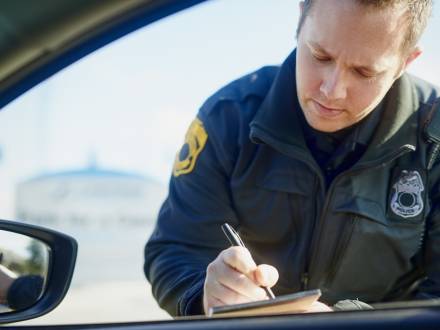
The average person in a DUI case might not be familiar with all of the legal jargon behind a charge. However, you should know two common terms that could be instrumental in protecting your rights: "reasonable suspicion" and "probable cause." Understanding these terms can help you know whether police followed the law. An Arlington Heights, IL criminal defense attorney can help you understand these terms and how they might apply to your case.
Scott F. Anderson, Attorney at Law has over 25 years of experience in criminal law, and has handled many DUI cases. He can review your traffic stop and arrest to see if your rights were violated.
Do Police Need Reasonable Suspicion to Pull You Over in a DUI Case?
In most cases, police officers need reasonable suspicion before they can pull you over for a suspected DUI. Reasonable suspicion means the officer has specific facts that point to a traffic violation or a sign of impaired driving. A hunch or a guess is not enough. The officer must be able to explain what he or she saw before the stop happened. One exception is a lawful sobriety checkpoint, where police do not need a specific reason to suspect each driver.
If police did not have a legal reason for the stop, the stop can be challenged in court. If a stop was not lawful, any evidence gathered afterward may be at risk. This includes breath test results, field sobriety test results, and statements made to police. Reasonable suspicion is a lower standard than probable cause, but it still requires more than a gut feeling.
Dashcam footage, squad car logs, and the officer's written report often become important pieces of evidence when a stop is questioned. A Rolling Meadows DUI defense attorney can review the stop and look for weaknesses in the officer's account.
What Creates Reasonable Suspicion for a DUI Traffic Stop?
Officers rely on driving patterns and visible traffic violations to justify a stop. Common examples include:
- Swerving between lanes or drifting out of a marked lane
- Driving well below or above the posted speed limit
- Ignoring a red light or a stop sign
- Braking for no clear reason
- Delayed reaction to a traffic signal
- Driving with a taillight or headlight out
A single traffic violation is often enough to support a stop. Officers do not need to witness several violations before pulling a driver over. Even a minor issue, such as a burned-out license plate light, can serve as the starting point for a stop.
Once the officer approaches the vehicle, other signs can add to his or her suspicion. These signs include the smell of alcohol, slurred speech, or open containers inside the car. The officer may also note fumbling hands, confusion when answering basic questions, or a delay in producing a license and registration. Each detail becomes part of the record used to justify the stop and, later, any arrest. Some of these signs depend on the officer’s judgment, so a defense attorney can question how the officer described them.
Do Police Need Probable Cause to Carry Out a DUI Arrest in 2026?
Reasonable suspicion allows police to stop a driver, but an arrest requires a higher standard called probable cause. Probable cause means the officer has enough facts to reasonably believe the driver committed a crime. In a DUI case, this evidence often comes from the driver's behavior, appearance, speech, and performance on field sobriety tests.
Illinois law defines driving under the influence and sets the legal limits for blood alcohol concentration under 625 ILCS 5/11-501. An officer does not need a breath test result to make an arrest. Slurred speech, poor balance, red or glassy eyes, and admissions made by the driver can all support probable cause. Field sobriety tests, such as the walk-and-turn test or the one-leg stand, are also commonly used to build probable cause before an arrest is made.
Once police believe they have enough evidence, they can place the driver under arrest and request a chemical test. A driver who refuses a chemical test can still face consequences, including a license suspension, even without a test result on record.
How Does Probable Cause Apply to Vehicle Searches?
Probable cause also plays a role in vehicle searches connected to a DUI stop. Police generally need probable cause or a valid exception to search a vehicle without a warrant. If an officer sees an open container or spots drug paraphernalia in plain view, this can create probable cause for a search.
After a lawful arrest, police can sometimes search a vehicle without a warrant if they have reason to believe it contains evidence of the crime. This is called a search incident to arrest. Police can also perform an inventory search before towing a vehicle. During this type of search, officers record the items inside the vehicle.
If police search a car without probable cause, a valid warrant, or a recognized exception, the search could be challenged. A defense attorney can examine the circumstances of the search and argue that it violated the driver's rights. This review often includes looking at the timing of the search, the officer's stated reason for the search, and whether the search went beyond what the law allows.
When Can Evidence Be Suppressed in a DUI Case?
Evidence can sometimes be kept out of court if police got it through an unlawful stop, arrest, or search. If a judge agrees that police violated a driver's constitutional rights, they can grant a motion to suppress. This means the evidence obtained because of the unlawful police action cannot be used at trial. Examples can include breath test results, statements made to police, or items found during an unlawful search.
Suppressed evidence can weaken the case against a driver. A motion to suppress is typically filed early in the case, well before trial, and it gives a judge the chance to decide on the legality of the stop, arrest, or search before the case proceeds.
Every DUI case comes with its own circumstances. A close review of the stop, arrest, and any search is an important early step in building a defense. Police reports, dashcam video, body camera footage, and witness accounts can all help show whether the officer followed the proper procedures at each stage of the process.
Contact Our Rolling Meadows, IL DUI Defense Attorney
At Scott F. Anderson, Attorney at Law, we look closely at how the stop, arrest, and any search were handled. If police violated your rights, it could affect the case. Call 847-253-3400 or contact our Arlington Heights, IL criminal defense lawyer to set up a free initial consultation.
CALL US TODAY AT 847-253-3400 FOR A FREE INITIAL CONSULTATION
Client accused of burglary was acquitted due to our skillful cross examination of eye witness identification.
Client accused of causing the death of another while driving under the influence - Acquitted.
Client accused of first degree murder - Acquitted.
Client accused of embezzlement - Charges never filed.
Hundreds of Secretary of State hearings for Drivers License Reinstatement - Won.



121 S. Wilke, Suite 301, Arlington Heights, IL 60005
847-253-3400
